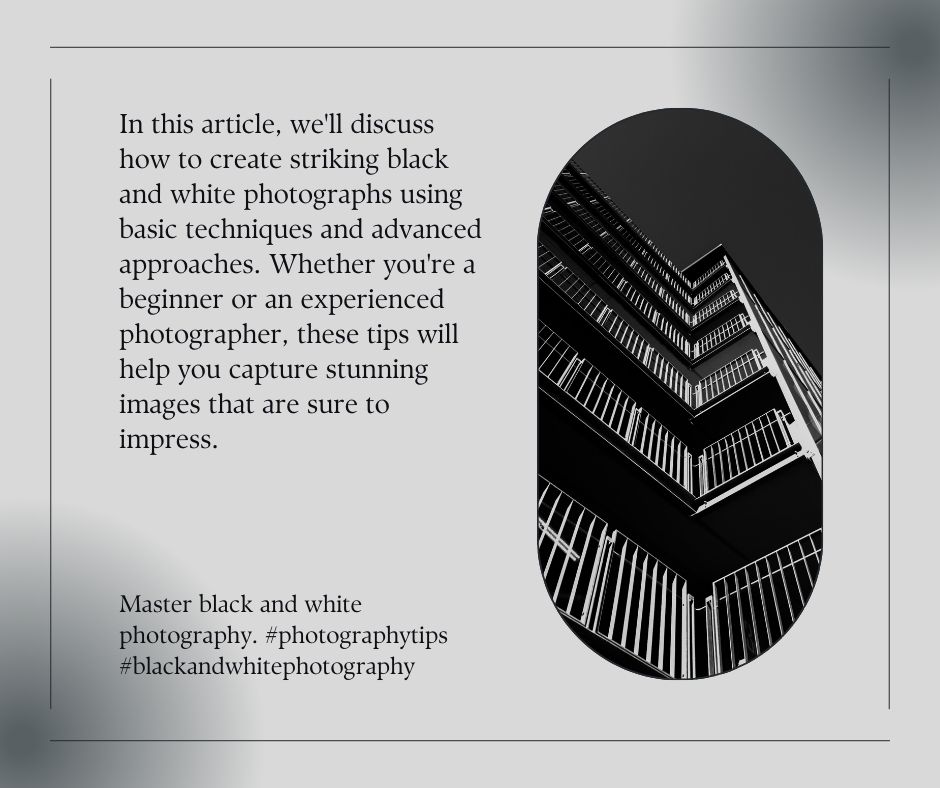
Black and white photography offers a unique and dramatic way to capture moments, scenes, and emotions. Here are some tips to help you create striking black and white images:
- Understand Light and Contrast: Light and contrast are key elements in black and white photography. Look for scenes with strong contrasts between light and shadow to create drama and depth in your images. Experiment with different lighting conditions, such as harsh sunlight or soft, diffused light, to see how they affect the contrast in your photos.
- Pay Attention to Texture: Texture can add interest and detail to black and white images. Look for subjects with interesting textures, such as rough surfaces, smooth fabrics, or weathered objects, and use lighting to emphasize these textures in your photos.
- Use Composition Techniques: Composition plays a crucial role in black and white photography. Experiment with composition techniques such as leading lines, symmetry, and framing to create visually compelling images. Pay attention to the arrangement of elements within the frame and how they interact with each other.
- Experiment with Different Perspectives: Changing your perspective can completely transform the look and feel of a black and white image. Try shooting from different angles – low to the ground, from above, or from unusual vantage points – to create unique and dynamic compositions.
- Convert in Post-Processing: While you can shoot in black and white using your camera’s settings or a dedicated black and white film, many photographers prefer to shoot in color and convert their images to black and white during post-processing. This gives you more control over the conversion process and allows you to fine-tune the contrast, brightness, and tonal range of your images.
- Pay Attention to Tonal Range: Black and white photography is all about capturing the full range of tones from pure white to deep black. Pay attention to the tonal range in your images and make adjustments as needed to ensure that you have detail in both the highlights and shadows.
- Experiment with Filters: In traditional black and white film photography, photographers often used colored filters to alter the way different colors were rendered in black and white. While you can achieve similar effects in digital black and white photography using software, experimenting with physical filters can still yield interesting results.
- Shoot in RAW: Shooting in RAW format gives you more flexibility when it comes to post-processing your black and white images. RAW files contain more data than JPEGs, allowing you to make more extensive adjustments to things like exposure, contrast, and white balance without sacrificing image quality.
- Study the Work of Masters: Take the time to study the work of master black and white photographers for inspiration and guidance. Pay attention to their use of light, composition, and tonality, and think about how you can apply similar techniques to your own photography.
- Practice, Practice, Practice: As with any form of photography, practice is key to improving your skills in black and white photography. Experiment with different techniques, subjects, and styles, and don’t be afraid to make mistakes – it’s all part of the learning process.
 www.my-dog-photography.com
Leave a comment