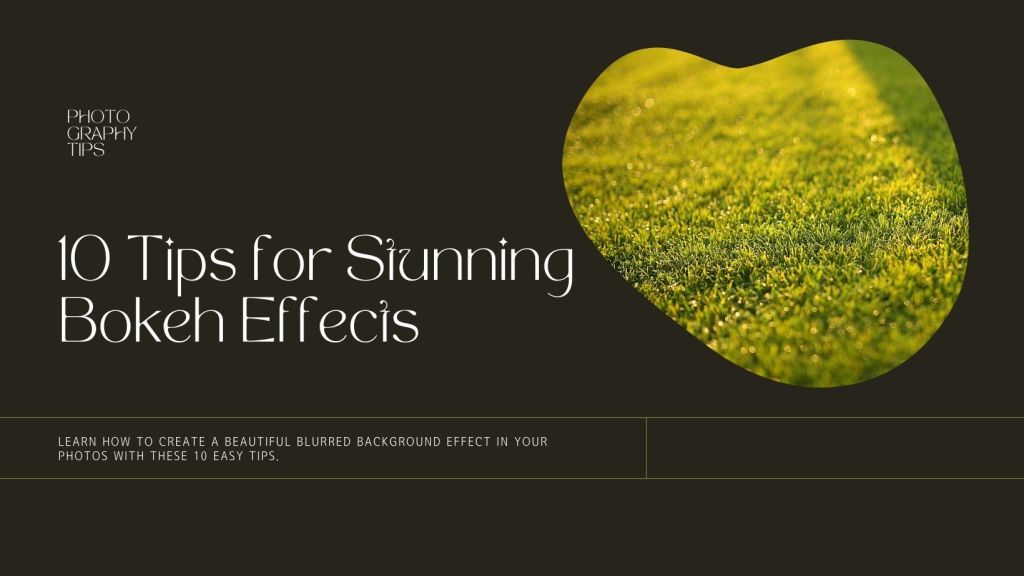
Creating stunning bokeh effects in your photos can add a touch of magic and artistry to your images. Bokeh refers to the aesthetic quality of the out-of-focus areas in a photograph, often characterized by soft, blurred circles of light. Here are some tips for achieving beautiful bokeh effects:
- Use a Wide Aperture: The most crucial factor in creating bokeh is using a wide aperture (a low f-stop number) on your camera. This narrows the depth of field, resulting in a sharp subject against a blurred background.
- Choose the Right Lens: Prime lenses with wide apertures (such as f/1.8 or f/1.4) are ideal for achieving pronounced bokeh. However, many zoom lenses also offer wide apertures at certain focal lengths.
- Focus on the Subject: Ensure that your subject is in sharp focus while the background is out of focus. Use autofocus or manual focus to achieve this.
- Distance Matters: The distance between your subject and the background can affect the intensity of the bokeh. A greater distance between the subject and background enhances the bokeh effect.
- Shoot in Low Light: Bokeh is often more pronounced in low-light conditions. Shooting during the golden hour (shortly after sunrise or before sunset) or at night can produce stunning bokeh effects.
- Use Bokeh Shapes: Some lenses allow you to create custom bokeh shapes by attaching a specially designed aperture disk in front of the lens. This adds a unique touch to your bokeh, such as hearts, stars, or other shapes.
- Consider Background Elements: Interesting background elements such as lights, foliage, or reflections can enhance the bokeh effect. Experiment with different backgrounds to see how they interact with the out-of-focus areas.
- Experiment with Bokeh Panorama: Bokeh panorama involves taking multiple shots with a wide aperture and stitching them together in post-processing. This technique can create a panoramic image with a dreamy bokeh-filled background.
- Use a Fast Lens: Lenses with wider maximum apertures (such as f/1.8 or f/1.4) are better at creating bokeh than those with narrower apertures. If you have access to such a lens, use it to maximize the bokeh effect in your photos.
- Post-Processing: You can enhance the bokeh effect further in post-processing software like Adobe Photoshop or Lightroom. Adjusting contrast, saturation, and adding vignettes can help draw attention to the bokeh areas.
Remember that bokeh is just one element of a photograph, and it should complement the overall composition and storytelling of your image. Experiment with these tips to create captivating bokeh effects that enhance your photography.
 www.my-dog-photography.com
Leave a comment