


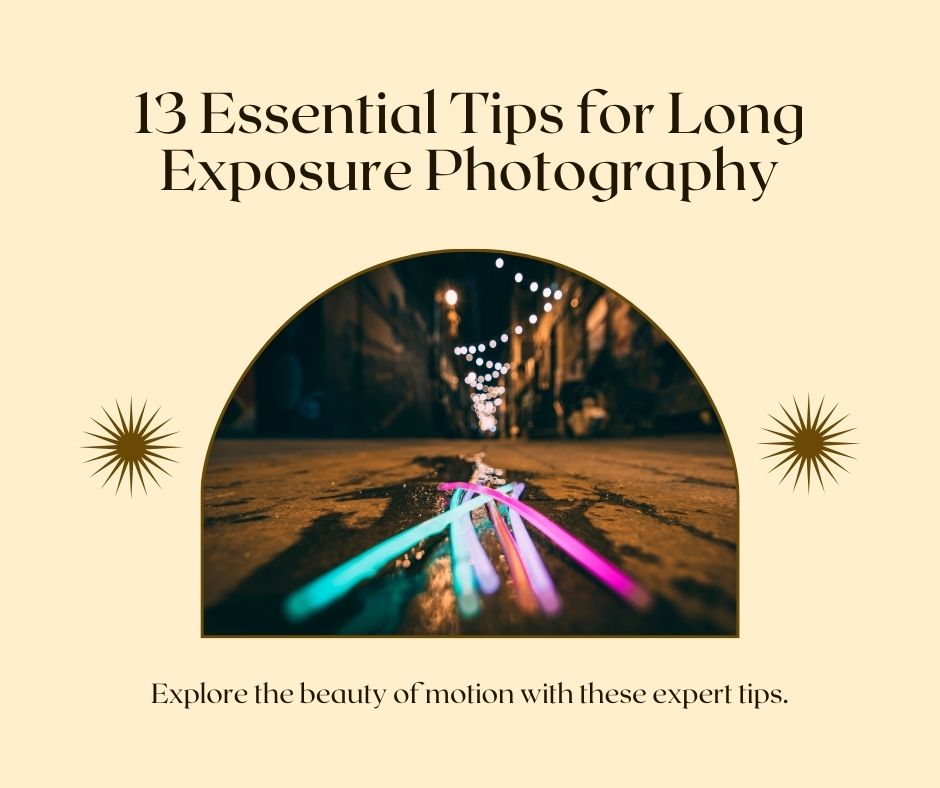
The long exposure technique in photography is one of my favorite techniques, it allows you to do night photography and obtain magnificent artistic effects such as light trail effects.
Whether you’re shooting landscapes, cityscapes, or even astrophotography, long exposures can add a sense of dynamism and mood to your photos. Here are some tips and techniques to help you master long exposure photography:
- Use a sturdy tripod: Since long exposures require the camera to be still for an extended period, a sturdy tripod is essential to prevent camera shake and ensure sharp images.
- Remote shutter release or self-timer: To minimize camera shake further, use a remote shutter release or the camera’s self-timer function to trigger the shutter without physically touching the camera.
- Select the right location: Look for scenes with interesting elements that will benefit from the motion blur created by long exposures. Waterfalls, rivers, oceans, traffic trails, and moving clouds are popular subjects for long exposure photography.
- Set your camera to manual mode: Manual mode gives you full control over settings such as aperture, shutter speed, and ISO, allowing you to achieve the desired exposure for your long exposure shot.
- Choose a small aperture: Use a small aperture (high f-stop number) such as f/8 or higher to increase the depth of field and ensure that everything in the frame is in focus.
- Set a low ISO: Keep the ISO as low as possible (usually ISO 100 or 200) to minimize noise in the final image.
- Experiment with shutter speed: The ideal shutter speed for long exposure photography depends on the amount of motion you want to capture. Start with shutter speeds of around 1 to 5 seconds and adjust as needed.
- Use neutral density (ND) filters: ND filters reduce the amount of light entering the camera, allowing you to use longer shutter speeds even in bright conditions. They’re particularly useful for daytime long exposures.
- Focus manually: Switch your lens to manual focus mode and carefully focus on your subject. Since autofocus may struggle in low light or with certain subjects, manual focus gives you more control over the sharpness of your image.
- Experiment with composition: Long exposure photography opens up opportunities for creative compositions. Try different angles, framing, and perspectives to create compelling images.
- Bracket your shots: Take multiple exposures at different settings to ensure you capture the perfect shot. Bracketing can help you fine-tune your exposure and composition.
- Be patient and persistent: Long exposure photography often requires patience and persistence to get the desired results. Don’t be afraid to experiment, try different settings, and revisit locations to capture the perfect shot.
- Post-processing: Use editing software such as Adobe Lightroom or Photoshop to fine-tune your long exposure images. Adjust exposure, contrast, colors, and sharpness to enhance the overall look of your photos.
Remember, long exposure photography is as much about creativity and experimentation as it is about technical skill. Don’t be afraid to push the boundaries and try new techniques to capture unique and captivating images.
 www.my-dog-photography.com
Leave a comment